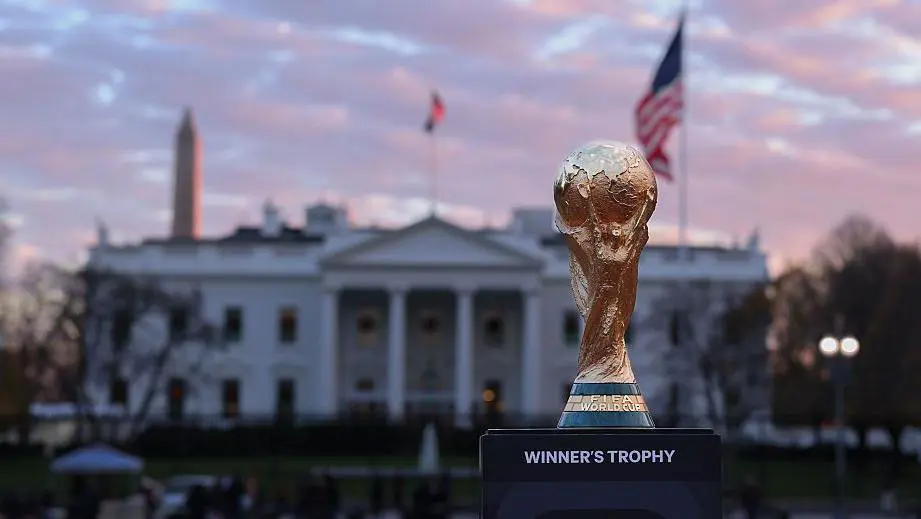
2026 World Cup Finals Draw: What to Expect
The 2026 World Cup finals draw, scheduled for Friday, promises to be a complex event filled with pots, quadrants, confederation constraints, and group position grids.
With numerous details to consider, we aim to present a clear overview of the process.
Fortunately, FIFA will utilize a computer to manage most of the logistics, ensuring a smooth operation. However, as UEFA discovered in 2021, technology can sometimes falter.
We hope there are no technical glitches in Washington when the draw ceremony begins.
Here’s an outline of how the draw will work, what to anticipate, and some key points to keep an eye on.
When Will the Draw Start and How Long Will It Last?
The ceremony will commence at 17:00 GMT (12:00 local time) on December 5. This glamorous event will feature much more than simply selecting countries from a hat.
Co-hosted by supermodel Heidi Klum, comedian Kevin Hart, and actor-producer Danny Ramirez, the event will include live performances from Andrea Bocelli, Robbie Williams, and Nicole Scherzinger. FIFA President Gianni Infantino and U.S. President Donald Trump are also expected to deliver speeches.
Following the speeches, there will be video presentations of the finalists, introductions, and the actual draw.
As the ceremony concludes, the Village People will perform "YMCA," with the entire event anticipated to last about 90 minutes.
How Has FIFA Seeded the Draw?
The 48 participating teams have been divided into four pots of 12, primarily based on FIFA world rankings.
Exceptions include the three host nations, which are automatically placed in pot one, and teams qualifying through the six playoff paths, which will be assigned to pot four.
Some teams from the four European playoff paths could potentially form strong groups.
For example, Italy and Denmark would have been in pot two based on their world rankings had they qualified directly, while Wales would have been in pot three.
The six playoff paths are:
UEFA Playoff A: Italy, Wales, Bosnia-Herzegovina, Northern Ireland
UEFA Playoff B: Ukraine, Poland, Albania, Sweden
UEFA Playoff C: Turkey, Slovakia, Kosovo, Romania
UEFA Playoff D: Denmark, Czech Republic, Republic of Ireland, North Macedonia
FIFA Playoff 1: DR Congo, Jamaica, New Caledonia
FIFA Playoff 2: Iraq, Bolivia, Suriname
How Will the Draw Work?
Each of the 12 groups will consist of one team from each of the four pots.
FIFA will initiate the draw by selecting teams from pot one, with co-hosts Mexico (A1), Canada (B1), and the United States (D1) using colored balls featuring their flags to signify their special status. Their group positions are predetermined to ensure they play all their matches in their respective countries.
The draw will then proceed with pots two, three, and four in sequence.
What About the Top Four Teams Being Kept Apart?
FIFA's strategy aims to maximize the potential for high-stakes matches in the later stages of the tournament.
For the first time, special seeding will be granted to the top four teams in the world rankings: Spain, Argentina, France, and England.
This special status will only be applicable if these countries win their respective groups.
For instance, if France is drawn first into Group C, they will occupy the green quadrant on the right side of the draw. Consequently, England can only be placed into the blue or turquoise quadrants on the left side, which include groups E, F, G, H, or I.
If Argentina is then assigned to the blue quadrant, England will be restricted to the turquoise groups G or H.
However, the four seeded teams are not necessarily guaranteed an easy path. Each quadrant could see a last-16 matchup between two group winners. For example, the blue quadrant could feature the winners of Group E and Group I, meaning a seeded team might face another pot one team, such as Brazil.
Additionally, if one of these seeded teams finishes as a group runner-up, they will lose their ranking privilege, potentially facing a more challenging knockout round.
Topics
Related news
- 2026 Men's World Cup Draw to be Held in Washington
- 2026 World Cup Qualifiers Update
- Trump Considers Moving World Cup Matches from Unsafe Cities
- FIFA President Advocates for Flexible World Cup Scheduling
- England Qualifies for 2026 World Cup: Key Information for Fans
- Excitement Builds for Next Summer's World Cup Draw
