Premier League Tactical Insights from the Second Weekend
The second weekend of the Premier League season showcased a variety of intriguing tactical adjustments and the strategic use of certain players.
Chelsea triumphed over West Ham, Arsenal dominated Leeds, Tottenham stunned Manchester City, and Manchester United settled for a draw against Fulham.
Here are four key observations from the weekend's matches.
Silva's Strategy Exposes United's Weakness
Following a competitive encounter at Old Trafford against Arsenal, Manchester United delivered a disappointing performance against Fulham, reminiscent of their struggles from the previous season.
Fulham manager Marco Silva's comments after the match highlighted how his team effectively challenged United. "We know how they defend and we know they like to squeeze from the back five. If you don’t provide bodies for them to compress, you can create superiority in the middle," Silva explained. "We know they play two in the middle. We tried to overload with our three plus Alex [Iwobi]. It was as simple as that."
This insight is significant. Ruben Amorim typically maintains a strict formation, employing a 3-4-3 setup that can shift to a 5-2-3, occasionally transitioning to a counter-attacking 5-4-1 against stronger teams.
Against the 5-2-3, Fulham advanced Ryan Sessegnon and Timothy Castagne high up the pitch to pin back United's wing-backs. United attempted to press high, but their formation left considerable gaps between defense, midfield, and attack.
In addition to the striker and full-backs, Silva astutely instructed his other attackers to avoid aligning with United's back five, opting instead to drop deeper. This tactic had two effects: it forced United's center-backs to step out of position to pressure Fulham's attacking midfielders, and it allowed Fulham to outnumber United’s midfield duo.
United's center-backs hesitated to step up, which enabled Josh King, Alex Iwobi, Sasa Lukic, and Sander Berge to dominate the midfield. When they did step out, the delay created openings in the spaces they vacated.
Silva's game plan not only provided numerical superiority in midfield but also exploited the movements of Leny Yoro and Luke Shaw, raising concerns about United's current setup. If personnel changes are not made, other teams are likely to adopt Fulham's approach.
Spurs Capitalize on City's High Press
Pep Guardiola's Manchester City faced their first home defeat of the season against a rapidly improving Tottenham side under Thomas Frank.
With the hiring of assistant coach Pep Lijnders, formerly of Liverpool, City has been focusing on refining their high press. Their defensive line has also been observed attempting to catch opponents offside by stepping up at critical moments.
Frank devised a strategy to counter City's high pressure by attacking down both flanks, particularly exploiting City’s left side, which led to Spurs' opening goal.
Spurs' Cristian Romero frequently faced pressure from Erling Haaland and would look to pass to his right-back, Pedro Porro. Romero's body language suggested he might seek a midfield pass, influencing Omar Marmoush's decision to apply less pressure on Porro. Porro smartly positioned himself deeper to receive the ball from Romero, allowing him more time and space.
Porro's strong passing ability enabled him to send the ball down the line to Mohammed Kudus, who dropped deeper. City’s high press forced their left-back to follow Kudus, yet Kudus skillfully resisted this pressure with his strength and ball control.
A noteworthy aspect was the involvement of Spurs’ midfielders, particularly Pape Matar Sarr, who made intelligent off-the-ball runs into the right wing area vacated by Kudus. As Nathan Ake followed Kudus, it pushed Ruben Dias or Nico Gonzalez into unfamiliar positions.
These counter-movements between the Spurs winger and midfielder facilitated impressive flank progression. City has struggled to defend the left flank, as seen in their loss to Al-Hilal in the Club World Cup, making it essential to watch how they address this potential vulnerability.
Grealish Flourishes in New Role
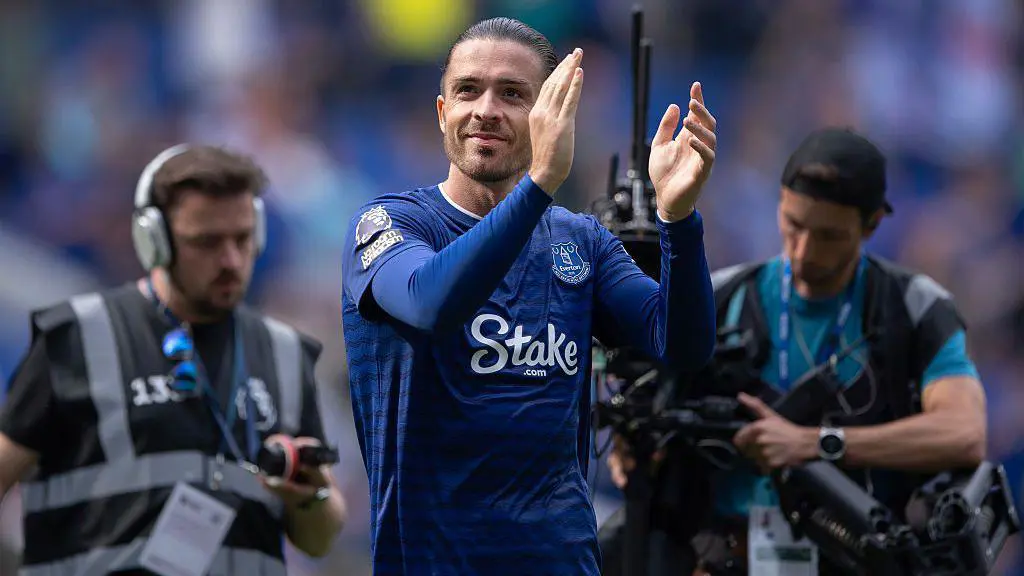
Jack Grealish excelled for Everton in their commendable victory over Brighton, leading some to believe he has returned to his Aston Villa form.
Having already surpassed his assist total from last season with two assists against Brighton, it is worth noting that Everton manager David Moyes deployed Grealish in a manner akin to Guardiola's approach at City.
In his brief appearance against Leeds the previous week, Grealish operated in deeper positions, while both wingers played more centrally, allowing full-backs to occupy wider areas. However, against Brighton, Grealish and Iliman Ndiaye played traditional wing roles, positioned high up the pitch and wide.
Grealish remained out wide and did not drop deep to carry the ball forward as he did at Villa. Instead, he strategically lingered on the flank, drawing Brighton's attention to one side of the pitch before switching to the far flank for one-on-one opportunities.
Some players command such attention that defenders crowd around them, and Grealish is one of those players. By receiving the ball in space, pushing the opposition back, and attracting multiple defenders, he created openings for his teammates.
Although Grealish's individual brilliance was evident, manager Moyes deserves recognition for effectively utilizing his talents.
Emerging Pressing Strategies and Their Implications
A noticeable trend this season is the evolution of teams' high pressing strategies.
For instance, in the Manchester City versus Spurs match, both teams employed wingers to press opposing center-backs. Newcastle United's Anthony Elanga also utilized this tactic against Aston Villa last week.
This week, Tottenham's Brennan Johnson pressed Ruben Dias, while City’s Rico Lewis moved infield, drawing one of the midfielders with him, and Rayan Cherki moved wide to exploit the space. To prevent Cherki from operating freely, Micky van de Ven followed him closely.
Topics
Related news
- Transfer News: Premier League Clubs Target Key Players
- Premier League Predictions for the Upcoming Season
- Transfer News: Premier League Clubs Pursue Key Signings
- Premier League Predictions: Liverpool vs Arsenal Highlights Weekend Matches
- Premier League Tactical Insights: Key Takeaways from the Weekend
- Premier League Transfer Updates: Liverpool, Everton, and Manchester City Eye New Signings
