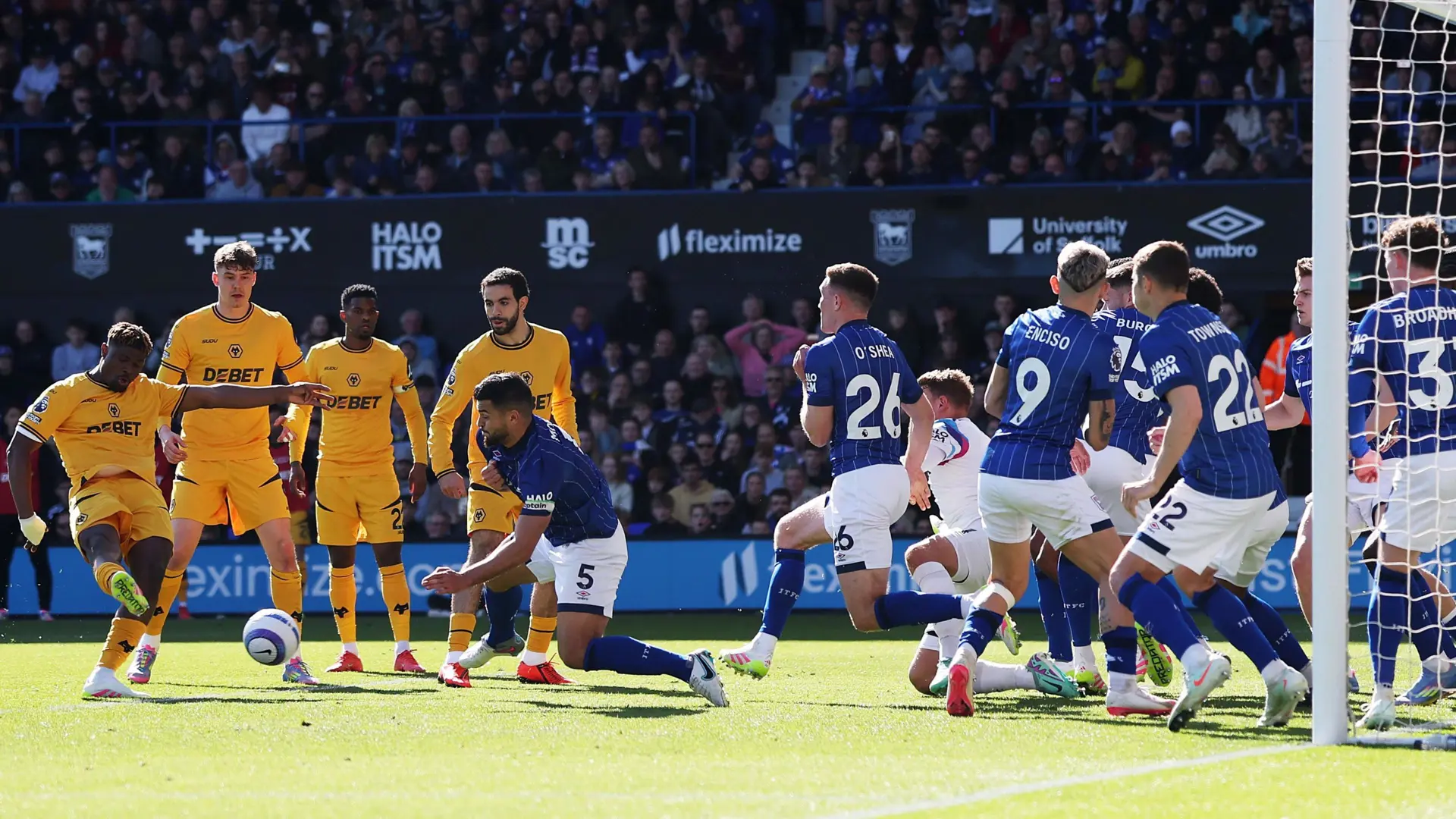
Exploring Proposed Football Rule Changes and Their Tactical Implications
Players, analysts, and referees have shared their thoughts on potential rule changes to enhance football, as reported by BBC Sport.
While some suggestions may seem impractical, the evolution of football has always been influenced by changing regulations.
This article examines the potential impacts of increasing the threshold for awarding penalties, adjusting tactics around indirect free-kicks, and implementing stop-clocks to curb time-wasting.
How Changing Penalty Rules Would Affect Tactics
One proposed change suggests that the punishment for fouls within the penalty area should correspond to the severity of the foul.
If only deliberate or cynical fouls in clear goalscoring positions were penalized with a penalty, while other fouls in the box resulted in free-kicks, the tactical decisions made by both attacking players and defenders would change significantly.
By ensuring that punishments fit the nature of the foul—offering free-kicks instead of penalties for less severe infractions—defenders would be encouraged to adopt a more physical approach. Centre-backs could challenge attackers without the constant fear of conceding a penalty for minimal contact, potentially leading to more aggressive defending against forwards receiving the ball with their back to goal, thereby complicating hold-up play.
In wider areas, defenders would have greater freedom to physically guide players out of the box. This shift towards more assertive dueling could complicate attacking play against teams employing low defensive blocks. As the potential for penalties diminishes, attacking teams might pivot towards exploiting width and utilizing crosses.
To counter aggressive defending, attacking teams may adopt faster, more direct strategies, aiming to bypass the defense before it can regroup. Overall, we might witness a decline in goals scored, as penalties often compel stubborn defensive teams to adopt a more offensive stance. Without this incentive, defensive teams may be less inclined to push forward, resulting in more cautious matches.
Direct or Indirect Free-Kicks Instead of Penalties?
If non-penalty fouls were to result in free-kicks, governing bodies would need to determine whether to standardize direct or indirect free-kicks.
Direct free-kicks could still present significant scoring opportunities, as the distance defenders must maintain from the ball would likely allow strong strikers to capitalize. Players such as Dominik Szoboszlai or Bruno Fernandes might still find ways to score from outside the penalty area despite defenders being positioned 10 yards back.
On the other hand, opting for indirect free-kicks could mitigate this issue since they are generally harder to convert into goals. Since Opta began tracking indirect free-kicks in the 2015-16 season, there have been only eight such incidents in the box, none resulting in goals.
Following an initial decrease in goals, we could see a resurgence in indirect free-kick strategies. Players who have previously succeeded in these scenarios often employed clever tactics to manipulate the defensive wall.
For instance, Alan Shearer scored from three indirect free-kicks in the Premier League and one for England, utilizing feigned shots to draw defenders out of position before scoring.
Would a Stop-Clock Stop Time-Wasting?
The introduction of a stop-clock to reduce time-wasting is another frequently discussed rule change. The concept involves playing 60 minutes of actual football, pausing the clock when the ball is not in play.
However, teams may still resort to time-wasting. A significant aspect of this tactic is to disrupt the game's rhythm, making it challenging for the attacking team to build momentum and tire out their opponents.
While time-wasting might persist, longer matches could provide teams that dominate possession with more scoring opportunities. This tactic allows less financially robust teams to compete against larger clubs, but it might also tilt the balance back toward wealthier teams, potentially leading to fewer upsets and widening the gap in league standings.
Moreover, technically skilled teams could find ways to waste time during open play, allowing the clock to run down. This might involve more players participating in build-up play or maintaining possession in defensive areas.
Currently, the average time the ball is in play in the Premier League is approximately 55 minutes and four seconds per game. A stop-clock of 60 minutes could result in more actual playtime than the current 90-minute matches.
In sports like the NFL, despite being 60 minutes long, games can extend beyond three hours to complete that time. Similarly, time-wasting and injuries could prolong a 60-minute football match, resulting in games lasting longer than the traditional 90-100 minutes fans are accustomed to.
This could lead to diminished crowd intensity, potentially reducing the home team's advantage during critical moments.
While the introduction of a stop-clock aims to enhance the spectacle of the sport, it could inadvertently favor elite teams, increase player fatigue over the season, and extend match durations beyond what fans expect.
Rule Changes Have Unpredictable Consequences
Football tactics are instrumental in shaping the game. Over time, these tactics can skew the balance too far in one direction, prompting rule changes aimed at restoring equilibrium. These adjustments subsequently reshape football tactics, creating a cyclical pattern.
While many proposed rule changes have merit, football's complexity means that the practical effects of new regulations often diverge from the intentions of rulemakers and fans alike.
Topics
Related news
- Pre-Season Preparations for Football Clubs
- Liverpool's Strategic Shift: Exploring New Tactics with Ekitike and Isak
- Reimagining Throw-Ins: Unlocking Tactical Potential in Football
- Premier League Tactical Insights from the Second Weekend
- Late Free-Kicks Secure Draw Between Southampton and Watford
- Reimagining Football: A Fresh Take on the Game's Rules
