Growing Trust in African Coaches as 2026 World Cup Qualifiers Approach
As the qualification for the 2026 FIFA World Cup draws to a close over the next six weeks, an increasing number of homegrown coaches are coming under scrutiny.
As of the September international window, 24 out of the 53 men's national teams in Africa, as ranked by FIFA, are led by African coaches.
In a notable shift towards confidence in local talent, African nations are increasingly choosing to hire coaches from within the continent, even when looking beyond their borders.
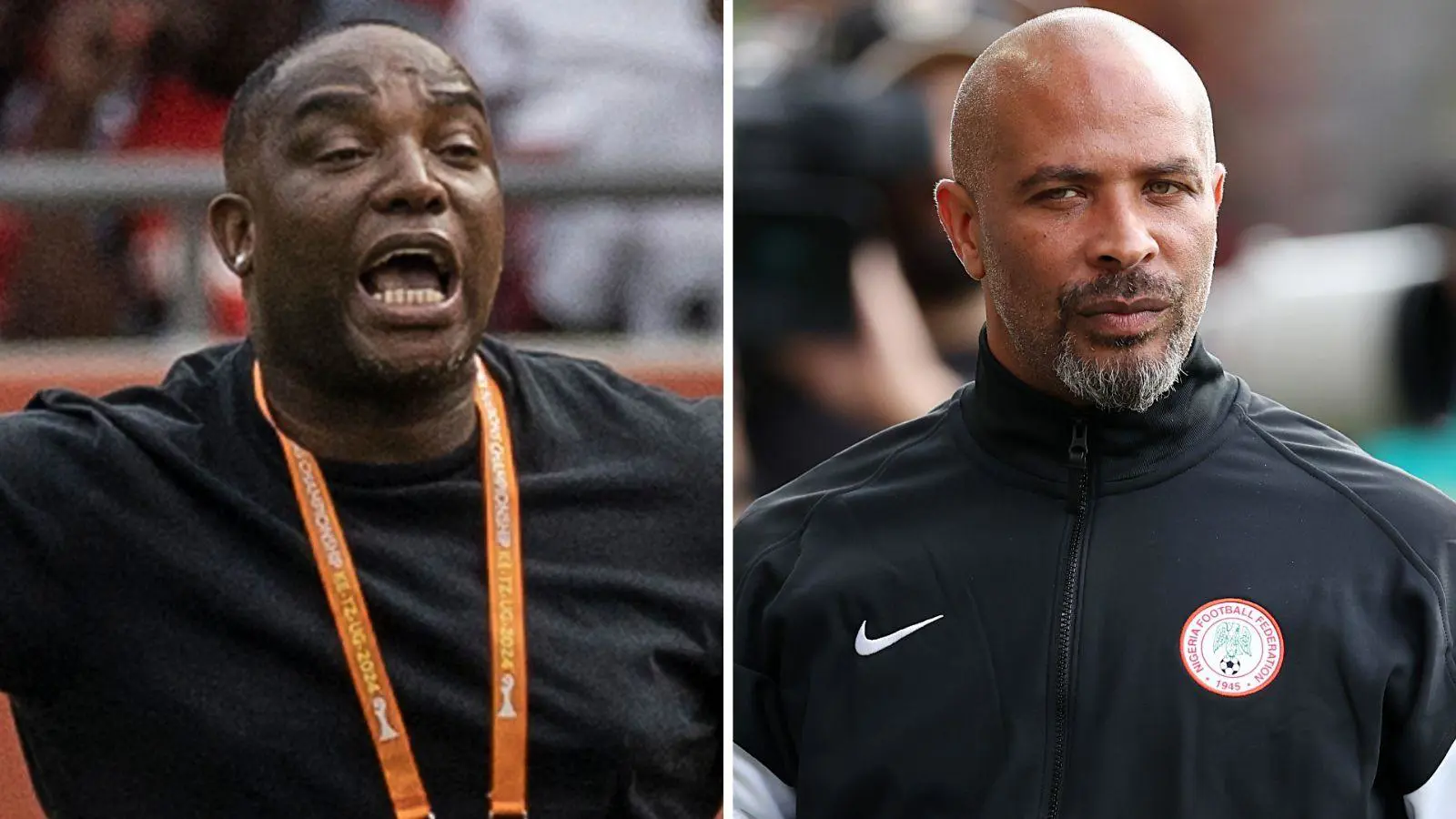
Prominent examples include Mali's Eric Chelle and South Africa's Benni McCarthy, who are currently coaching Nigeria and Kenya, respectively. Libya also made headlines by appointing former Senegal coach Aliou Cisse, whose contract reportedly makes him the second-highest paid African coach in history.
This change in approach has been welcomed positively by many national federations that have traditionally relied on foreign coaches.
“In Africa, we have many capable coaches, and we deserve these positions,” Chelle told BBC Sport Africa. “I believe we have improved, and I am grateful that some countries are giving us the opportunity to demonstrate our capabilities.”
A Debate 'as Old as Football'
The support for African coaches gained momentum after Algeria defeated Senegal in the 2019 Africa Cup of Nations (AFCON) final, both teams being managed by homegrown legends.
Djamel Belmadi and Cisse, who were influential midfielders for their respective teams, sparked a renewed belief in local coaching talent.
The subsequent two AFCON tournaments have also been won by coaches from the continent—first Cisse and then Ivory Coast’s Emerse Fae—while the number of European coaches participating has decreased.
At the 2022 World Cup, Walid Regragui emerged as a significant success story, leading Morocco to the semi-finals, marking a historic achievement for African football.
Moreover, all five African representatives at the Qatar tournament were coached by indigenous coaches, with each team securing at least one victory.
Cisse remarked that the debate over the merits of African versus foreign coaches “is as old as football itself.” However, he acknowledged that investment in coaching programs by the Confederation of African Football (CAF) and FIFA has contributed to raising standards.
“African coaches are developing more and more over time,” he stated. “Football is now universal; qualities and competency matter more than race, color, or nationality.”
'White Coaches are Coming for Our Money'
Once feeling “powerless and hurt,” as former Mali coach Mohamed Magassouba expressed in 2022, indigenous coaches are now being given the freedom to make mistakes and grow.
McCarthy, who took over as Kenya's coach in March, has observed a shift in mindset among federations. “We’ve dedicated our lives to this game, but for various reasons, we were often deemed unfit for coaching or leadership roles,” the former Porto and Blackburn striker told BBC Sport Africa. “Now, people within our continent are beginning to believe in our capabilities instead of always relying on Europeans.”
Some advantages of hiring African coaches include heightened motivation, emotional investment, and a deep understanding of the cultural expectations of their communities.
“It’s crucial to understand how African players think,” Chelle noted. “If you place a Nigerian in Vietnam, it would be challenging for him, just as it would be in Europe.”
Additionally, appointing African coaches is generally more cost-effective. Historical evidence suggests that European coaches have often been less focused on the long-term goals of their employers.
“The white coaches come to Africa primarily for the money,” Stephen Keshi famously told the BBC in 2013, the year he led Nigeria to AFCON victory. “They are not doing anything we cannot achieve.”
However, Chelle cautioned that African coaches must not become complacent. “We need to enhance our game preparation and player performance,” he emphasized. “We must work on tactical and technical aspects and bring a more professional approach.”
History on the Horizon?
Qualification for the World Cup is a zero-sum game—while one African coach may achieve success, many others will inevitably face failure.
Some strategic decisions have proven effective in the race for the 2026 World Cup. Bubista, who has managed Cape Verde since 2020, has positioned the Blue Sharks as contenders for historic qualification ahead of traditional powerhouses Cameroon, coached by Belgian Marc Brys.
Meanwhile, Egypt's choice to appoint legendary striker Hossam Hassan, breaking away from their tradition of employing defensive overseas coaches, has placed them five points clear and on track for only their third World Cup appearance.
Conversely, Senegal's decision to replace Cisse with assistant Pape Thiaw has coincided with a decline in their offensive performance, having scored only eight goals in six Group B matches. Despite achieving their first-ever victory over England in June, they are currently entangled in a three-way battle with DR Congo and Sudan for a World Cup spot.
Great Salaries, Faltering Starts
Even a significant financial investment in an African coach does not guarantee success. Cisse, reportedly earning $83,000 (£62,000) monthly, faced a challenging start with Libya, securing just one point from six available in Group D in March.
Nigerian officials noted that Chelle's unique advantage lies in his understanding of African football. Hired for $600,000 (£448,000) annually, he began with a victory over Rwanda but faced criticism following a draw with Zimbabwe. He needs maximum points against Rwanda and South Africa this month.
In Kenya, McCarthy has received praise for his attacking style, but his initial results have led to the East Africans being ruled out of qualification. One official from the Football Kenya Federation dismissed reports suggesting that McCarthy was earning $62,000 (£46,300) per month.
With four World Cup qualifying matchdays remaining, significant changes could occur as pressure mounts. However, the outcome of who secures the nine guaranteed qualifying slots could either pave the way for more African coaches or lead to a return to being overlooked.
African Coaches in Charge of Their Own Countries (18)
Brama Traore (Burkina Faso), Bubista (Cape Verde), Eloge Enza-Yamissi (Central African Republic interim), Hossam Hassan (Egypt), Juan Micha (Equatorial Guinea), Thierry Mouyouma (Gabon), Otto Addo (Ghana), Emerse Fae (Ivory Coast), Thomas Kojo (Liberia), Walid Regragui (Morocco), Chiquinho Conde (Mozambique), Collin Benjamin (Namibia), Pape Thiaw (Senegal), Ralph Jean-Louis (Seychelles), Mohamed Kallon (Sierra Leone), Yusuf Ali Nur (Somalia).
Topics
Related news
- Rui Santos Joins Başakşehir as Set-Piece Coach
- Chelsea Stuns PSG to Win Club World Cup in Tactical Masterclass
- Scottish Clubs Advance to Premier Sports Cup Last 16
- Scottish Premiership: A Season of Anticipation and Excitement
- 2026 World Cup Qualifiers Update
- PSG Begins Champions League Title Defense with Dominant Win Over Atalanta
