Manchester Derby Analysis: United's Struggles Against City
Ruben Amorim's Manchester United faced a disheartening defeat in the Manchester derby at the Etihad, leaving the Portuguese manager with a Premier League record of eight wins from 31 matches.
The 3-0 loss raises questions about whether it was due to flawed tactics, individual errors, or an outstanding performance by Manchester City.
In this analysis, we delve into the tactical approaches of both teams during the match.
How City Created a Midfield Overload
In the first half, City concentrated their attacks down the left flank. Manager Pep Guardiola aimed to exploit vulnerabilities in United's defensive setup, particularly targeting their back five and the pressing responsibilities of the wider centre-backs.
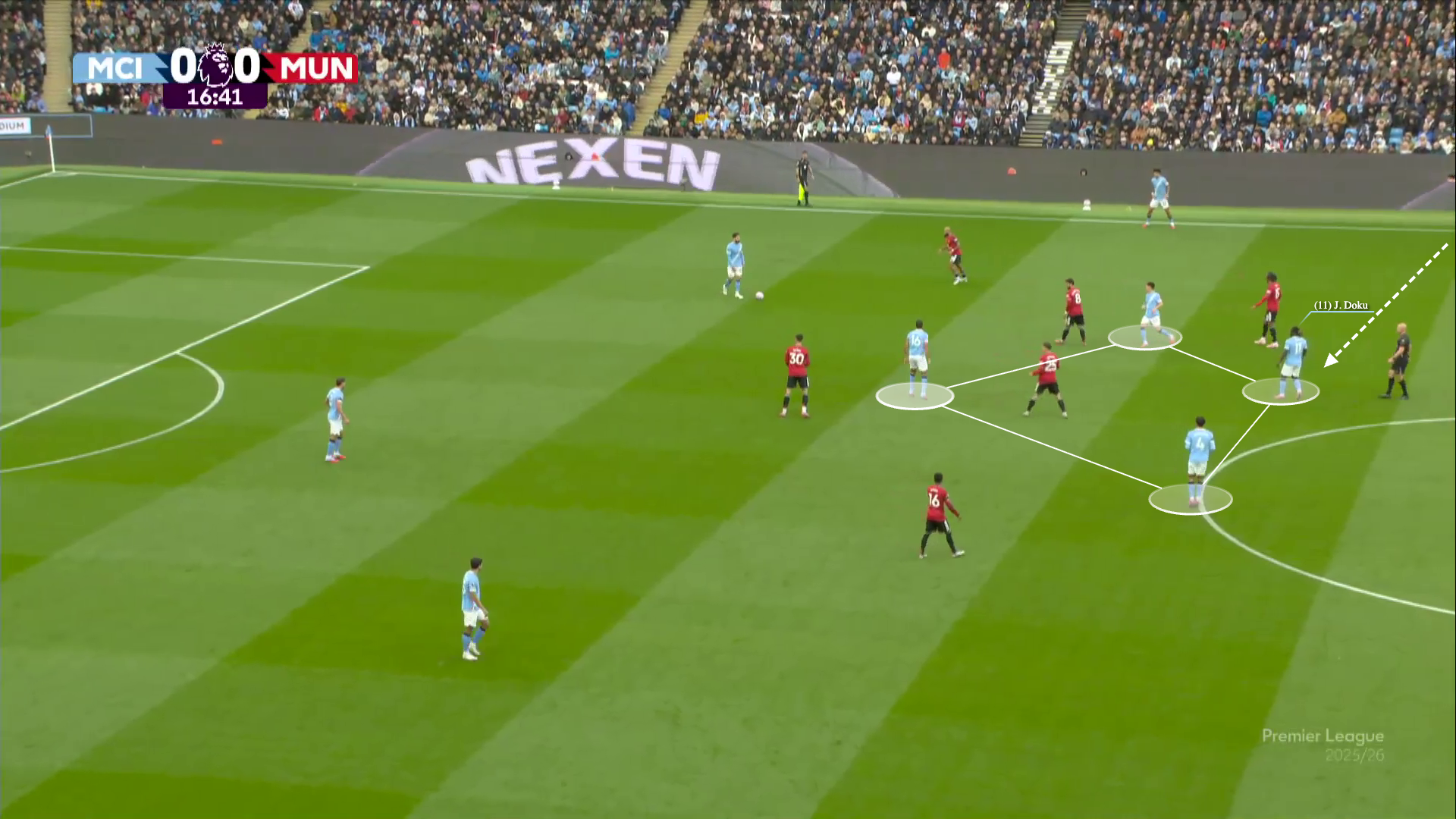
City's left-back, Nico O'Reilly, positioned himself wide on the touchline to draw United's right wing-back, Noussair Mazraoui, towards him. Meanwhile, Jeremy Doku, typically marked by Mazraoui, moved more centrally.
This tactical shift left Mazraoui in a dilemma: he chose to ignore Doku and instead press O'Reilly when the ball reached him. Doku's central positioning provided City with a numerical advantage in midfield, with Rodri, Phil Foden, Doku, and Tijjani Reijnders forming a box around United's midfield duo, reminiscent of Fulham's strategy against United earlier this season.
United's Disjointed Pressing
As Doku drifted inward, it was Leny Yoro, United's right centre-back, who was tasked with pressing him. This proved challenging for the natural central defender, especially with Foden also occupying those spaces.
Yoro's attempts at aggressive defending occasionally turned the midfield contest into a four-versus-three situation. However, he often retreated to maintain proximity to his backline, leading to a disjointed press from United and leaving City with free passing options.
After the match, United captain Bruno Fernandes acknowledged the need for his team to be "more brave with full pressure" to prevent conceding early goals. He noted, "City take that risk against us - we need to do the same," highlighting the miscommunication that led to gaps in United's defense.
City's Effective Pinning Strategy
City's strategic use of pinning was particularly noteworthy. Pinning involves placing a player in a specific area, compelling an opponent to remain there. For instance, when a winger stands next to an opposing full-back, the defender is unlikely to leave, thereby 'pinning' them.
City employed this tactic throughout the match to weaken United's aggressive defending and create space for their attackers. O'Reilly's positioning pinned Mazraoui to the touchline, allowing Doku to move inside unmarked. Similarly, Reijnders' movement restricted Luke Shaw, enabling Doku to receive the ball unopposed and assist the first goal.
United's Midfielders Struggle to Track Runs
For City's opening goal, Fernandes and Manuel Ugarte were positioned defensively, yet the hosts managed to capitalize on a loose ball in the penalty area without contest. Late runs into the box have previously resulted in goals against United, and Fernandes's failure to track these runs was evident once again.
While Fernandes contributes significantly to United's midfield with his passing and industry, his defensive awareness and ability to track runs are less developed. This raises questions about whether United have structured their team to leverage individual strengths while minimizing weaknesses.
In contrast, Guardiola's deployment of Foden, known for his timing and ability to make late runs, proved to be a tactical advantage that bore fruit.
Should Managers Adapt Their Strategies?
Post-match discussions centered on whether United's issues stem from player personnel or systemic flaws. While better players can enhance performance, United's current struggles also relate to their tactical structure and the roles assigned to players.
Even with superior individuals, opponents could still exploit United's system using similar tactics to those employed by City and Fulham. If teams can consistently find ways to exploit a system, a manager's inability to address these issues may concern fans.
Amorim, however, seems committed to his tactical philosophy. He stated, "When I want to change my philosophy, I will change. If not, you have to change the man." With the squad unlikely to see changes before the January transfer window, addressing these challenges may require adaptations to the system or player roles.
Guardiola, once again, demonstrated his willingness to adjust his tactics to maximize player strengths and mitigate weaknesses, as evidenced by the introduction of new goalkeeper Gianluigi Donnarumma, suggesting a potential shift towards a more direct style of play.
Topics
Related news
- Transfer News: Premier League Clubs Target Key Players
- Premier League Predictions for the Upcoming Season
- Premier League Tactical Insights from the Second Weekend
- Manchester United's Struggles Under Amorim: An Analysis
- Premier League Tactical Insights: Key Takeaways from the Weekend
- Manchester United's Ongoing Struggles Highlighted After Derby Loss
