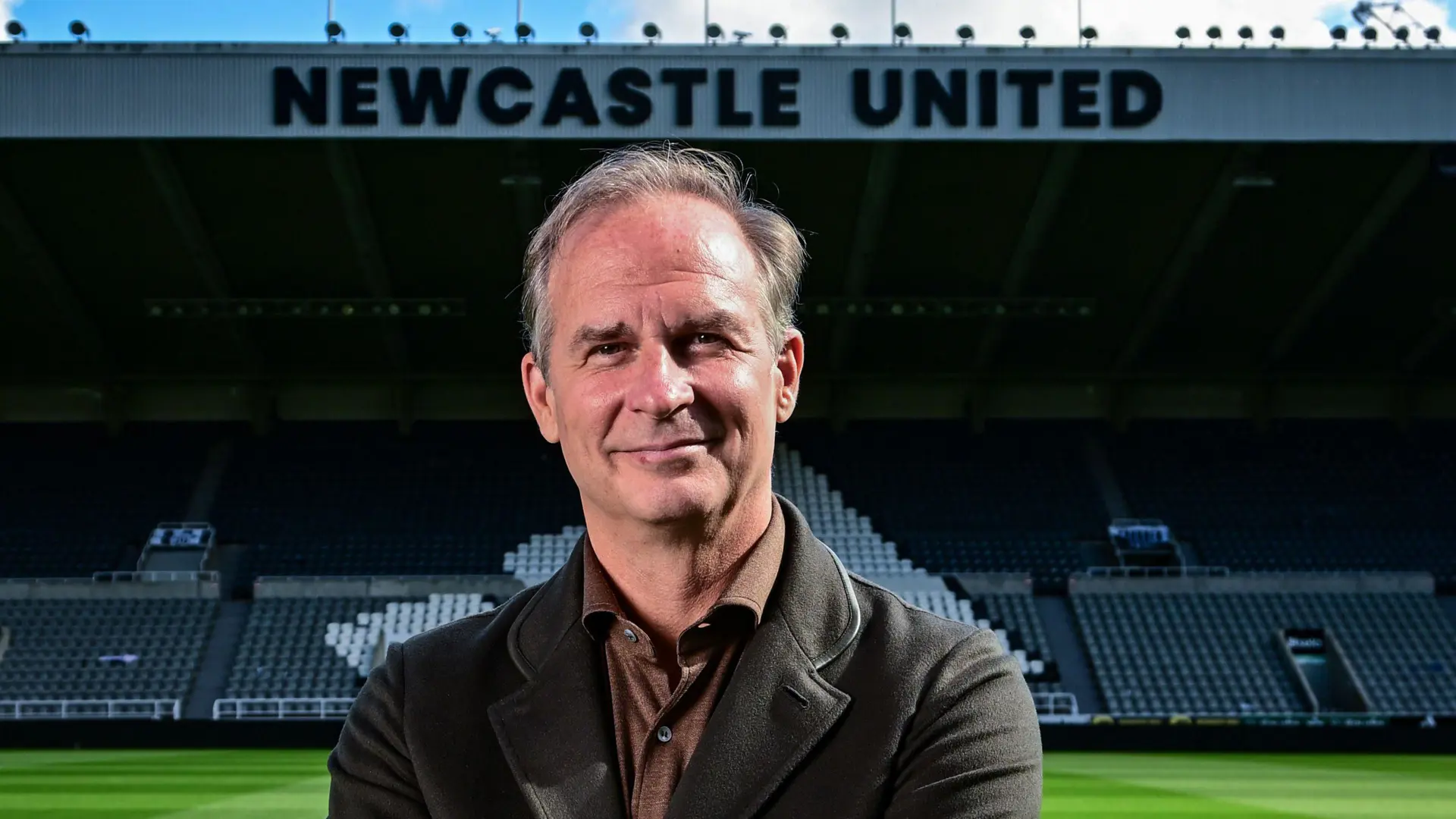
Newcastle United's Ambitious Vision for 2030
The year is 2030.
Newcastle United aspires to be a "perennial contender," vying for the most prestigious titles in football and participating in discussions about being the world's top club. This ambitious five-year vision comes from David Hopkinson, the newly appointed chief executive of Newcastle United.
“Such progress can be achieved more quickly than one might expect,” the Canadian executive stated confidently. “First and foremost, we must be fully aligned in our goals. We need the courage to disregard skeptics and those who mock us, as there will undoubtedly be some.”
While skepticism is understandable, especially with Newcastle currently positioned 12th in the Premier League, Hopkinson's vision is rooted in his commitment to building an organization solely focused on winning.
Hopkinson brings extensive experience from his previous role at Maple Leaf Sports and Entertainment, where he managed the commercial operations for the Toronto Maple Leafs and Toronto Raptors. He noted that the Raptors were struggling in 2014 but turned their fortunes around to win the NBA championship just five years later.
Although the Premier League lacks playoff systems like basketball, Hopkinson believes Newcastle is at a pivotal moment in sports, presenting a unique opportunity for transformation.
“If our goals are not time-bound, they remain mere fantasies,” he remarked.
Bridging a Significant Revenue Gap
However, Hopkinson acknowledges that such a dramatic transformation will not occur overnight, even with head coach Eddie Howe being regarded as a “special” manager. Since his arrival in September, Hopkinson has conducted a thorough review and presented a transformation plan with carefully defined milestones for the upcoming seasons to the club's owners. He admits there is “a lot of work to do.”
Newcastle's revenues are projected to exceed £400 million, a significant increase from the £140 million reported in 2021. Nonetheless, they face a considerable gap compared to clubs like Manchester City, which generated £715 million in income two seasons ago. This financial disparity allowed Manchester City to spend nearly £200 million more on wages than Newcastle within the financial regulations for the 2023-24 season. Historically, clubs with the highest wage bills tend to secure the most points in the league.
Enhancing revenue streams will be a primary focus for Hopkinson, who also previously served as president of Madison Square Garden Sports and, notably, as the head of global partnerships at Real Madrid. Michael Sutherland, who worked alongside Hopkinson at Real Madrid as the chief transformation officer, praised his ability to bring “more structure and a professional approach to sponsorship management.”
“One might think it’s easy to work with Real Madrid because everyone wants to sponsor the club,” Sutherland explained. “However, it presents its own challenges. If Real Madrid has a poor season and fails to win championships, it significantly affects the value proposition for sponsors. One of the key improvements was the sophistication of our partner offerings and the speed of execution.”
‘Manchester City Reached Their Goals Earlier’
There are potential areas for growth at Newcastle. Although the staff count has doubled to over 550 in recent years, there are still crucial senior positions that need to be filled. The club's digital and data capabilities require substantial development and currently lag behind their competitors.
Hopkinson has also pointed out “less obvious opportunities” with global partners beyond those associated with Newcastle's majority owners, the Public Investment Fund (PIF) of Saudi Arabia. Following the 2021 takeover, there was concern among top-flight executives about Newcastle potentially securing lucrative sponsorship deals with Saudi firms through the PIF. A senior figure from another club even requested a vote to impose a temporary ban on related-party transactions shortly after the takeover.
As a result, associated party transaction (APT) rules were overwhelmingly passed by Premier League clubs to ensure that deals reflect fair market value. This gradual approach was anticipated, as football finance expert Kieran Maguire explained. “Manchester City was able to achieve their goals earlier when associated party transactions were not an issue, allowing them to sign sponsorship contracts without cumbersome processes and constraints. They benefited from that,” he said. “Now, it’s much more challenging, and sponsors are likely to target clubs with significant trophies to enhance their brand.”
‘We Must Continuously Raise the Bar’
There are numerous avenues to bolster revenue streams in the long term, particularly through matchday income. However, uncertainty looms over the future of St James' Park. Hopkinson acknowledged that the club will remain at the stadium in its current state for “many years,” regardless of whether renovations are made or a new venue is constructed.
The club is also exploring significant investments to develop a new state-of-the-art training facility to address the limitations of their current site in Benton. Sporting director Ross Wilson, who joined Hopkinson from Nottingham Forest, noted that efforts are underway to effectively double the size of the club’s existing training base.
These initiatives highlight the extensive challenges Newcastle faces in their quest to join the elite ranks of football. “Many of the discussions we’re having are similar to those other clubs are having,” Wilson added. “We must keep raising our standards because everyone else is doing the same.”
Topics
Related news
- Newcastle striker Callum Wilson announces departure
- Newcastle United Agree £55m Fee for Anthony Elanga
- Newcastle United Eyes Record Transfer with Interest in Hugo Ekitike
- Liverpool and Newcastle Compete for Hugo Ekitike Amidst Transfer Market Activity
- West Ham Engages in Talks with Free Agent Callum Wilson
- Transfer Rumors: Newcastle, Manchester City, and Bayern Munich Eye Key Players
