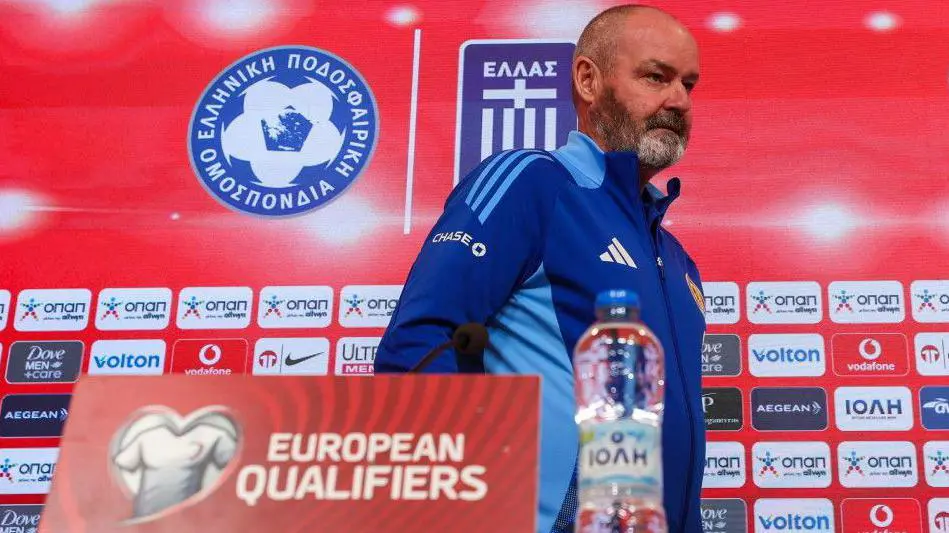
Scotland Aims for World Cup Qualification Against Greece
Steve Clarke has emphasized the need for every player in the Scotland squad to deliver their "A game" as the team prepares for crucial World Cup qualifying matches against Greece on Saturday night in Piraeus and Denmark at Hampden on Tuesday.
A draw followed by a win would secure Scotland's place in the World Cup finals for the first time since 1998, while Greece has already been eliminated from contention and has little to play for.
"We need more from every player," head coach Clarke stated. "Every player in the squad has a role to play in the upcoming games. We need them all fully focused and performing at their best. The more players who bring their A game, the better our chances will be."
The Scotland squad transitioned directly from a warm-weather training camp in Turkey to Athens on Friday, and Clarke reported no new injury concerns. "The players have been good," he said. "They were quite relaxed in Turkey, and many of them have gained valuable experience in big matches, which helps them prepare to perform at their peak. We have to trust that they will execute well on the pitch. They are ready and understand the significance of the upcoming game."
While Clarke has made his decision on the starting lineup, he has not disclosed which goalkeeper will take the field. Craig Gordon of Heart of Midlothian is the likely choice, despite not having played any competitive minutes this season.
"I approached the goalkeeper decision with an open mind," Clarke remarked. "As a coach, it's essential to remain flexible. You need to observe how the players train and perform before making a decision."
When asked about the importance of the goalkeeping choice, Clarke responded, "Every decision is significant when you're the head coach facing two high-stakes matches."
Reflecting on Scotland's last game—a disappointing 2-1 victory over Belarus at Hampden—Clarke acknowledged his frustration with the team's performance. "No, I wasn't spooked," he said. "Such things happen in football. My primary concern was dropping points in a game we should have won, which could have jeopardized our qualification chances. That was likely the source of my anger—fear of making a mistake. Fortunately, we managed to avoid that situation."
Clarke stated he is not looking ahead to the Tuesday match against Denmark or imagining the possibility of qualifying for the World Cup. "No, my focus is solely on this game. We need a positive result here, either a draw or a win, to make the second game more relevant. That's my only concern right now."
Meanwhile, Greece's head coach Ivan Jovanovic believes his team is stronger than Scotland but is not motivated by thoughts of revenge after his squad's qualification hopes were dashed by three consecutive defeats, including a 3-1 loss at Hampden.
"I don’t view football that way," he said. "The Scots have greater motivation, but we have our own reasons to perform well for our fans and our team. I respect Scotland as a very good team with talented players. However, in our four matches, we only failed to reach our expected level in one game—the 3-0 loss to Denmark. We conceded goals that we typically wouldn't, but our confidence remains high."
What Does Scotland Need to Win the Group?
Scotland and Denmark are currently tied on 10 points, with Denmark enjoying a six-goal advantage in goal difference, which is the first tiebreaker if teams finish level on points.
Scotland aims to secure their position without needing to rely on goal difference. Given Denmark's previous 6-0 victory over Belarus, it is likely they will win again, moving to 13 points. Should Scotland defeat the already-eliminated Greece in Athens, they would match that total, setting the stage for a decisive encounter at Hampden.
A draw against Denmark on November 18 would likely favor the Danes due to their goal difference. If Scotland draws in Athens, a win against Denmark would still be enough to top the group. However, a defeat in Greece, coupled with a Denmark victory over Belarus, would necessitate a significant margin in Scotland's final game to maintain any hope of automatic qualification.
Team News
Clarke expects an update on Billy Gilmour, who is injured for this match, to be available on Monday. The Napoli midfielder remains uncertain for the Denmark game on Tuesday.
What to Expect from Greece?
Greek football expert Stephen Kountourou warns that Jovanovic's team cannot underestimate Clarke's side in Athens. Speaking on the BBC's Scottish Football Podcast, he stated, "I expect Jovanovic to field a mostly experienced team against Scotland. Depending on the match's progress, he may introduce some younger players making their debuts. Scotland won the last time they played at the Georgios Karaiskakis Stadium, and our home form has not been strong, creating an opportunity for Scotland to secure another win in Greece. However, it is crucial for us to perform well at home, demonstrate resilience, and show that our project has potential. We need to instill confidence in our fans ahead of the next European Championship qualifiers."
How to Follow the Match
Viewers can watch the match on BBC Scotland, BBC Two, and iPlayer starting at 19:15 GMT on Saturday night, as Steve Clarke's team aims to set up a winner-takes-all match against Denmark for the top spot in Group C. Steven Thompson will be joined by Neil McCann and Leanne Crichton, with James McFadden providing commentary alongside Liam McLeod.
Listeners can tune in to BBC Radio Scotland via radio, smart speaker, or BBC Sounds. Kenny MacIntyre will lead the pre-match build-up starting at 18:00, with Billy Dodds joining Alasdair Lamont for commentary, and Willie Miller and Tom English rounding out the radio team.
Coverage will also be available on BBC Radio 5 Live and BBC Radio Nan Gaidheal (Gaelic commentary), both accessible through BBC Sounds. The TV and radio coverage will be complemented by live text commentary, analysis, and opportunities for audience engagement on the BBC Sport website and app.
Match Statistics
Topics
Related news
- Hickey Returns to Scotland Squad Ahead of World Cup Qualifiers
- Scotland Begins World Cup Qualifying Campaign Against Denmark
- Scotland's World Cup Aspirations: A Balancing Act of Hope and Skepticism
- Scotland Prepares for Crucial World Cup Qualifier Against Greece
- Scotland's World Cup Qualification Scenario Amid Denmark vs. Greece Match
- Denmark Defeats Greece, Secures Playoff Spot for Scotland
